
Water recovery & ZLD
LTDis®
Low-temperature distillation at 200–400 kWh/m³ thermal, with TPTec.
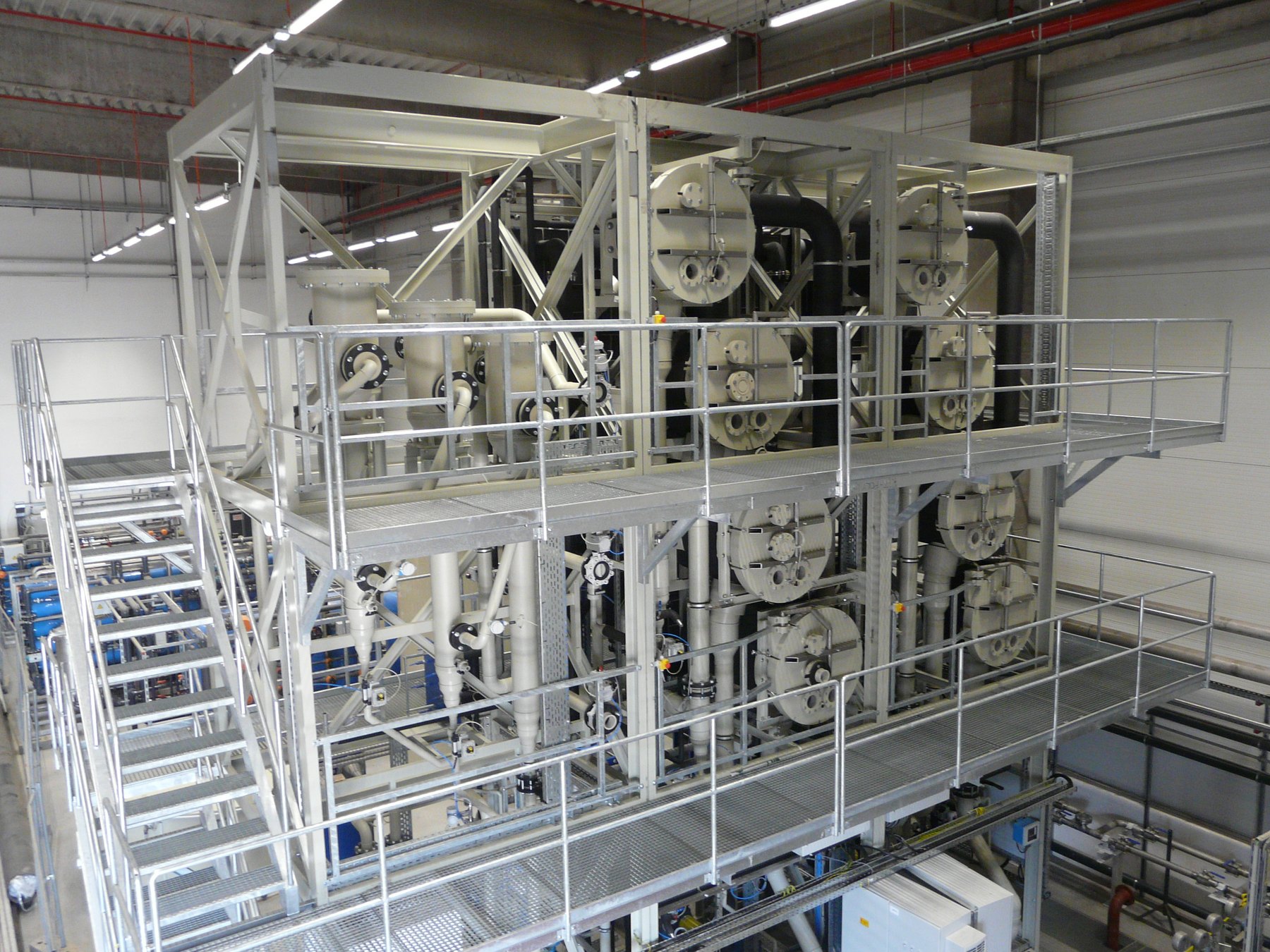
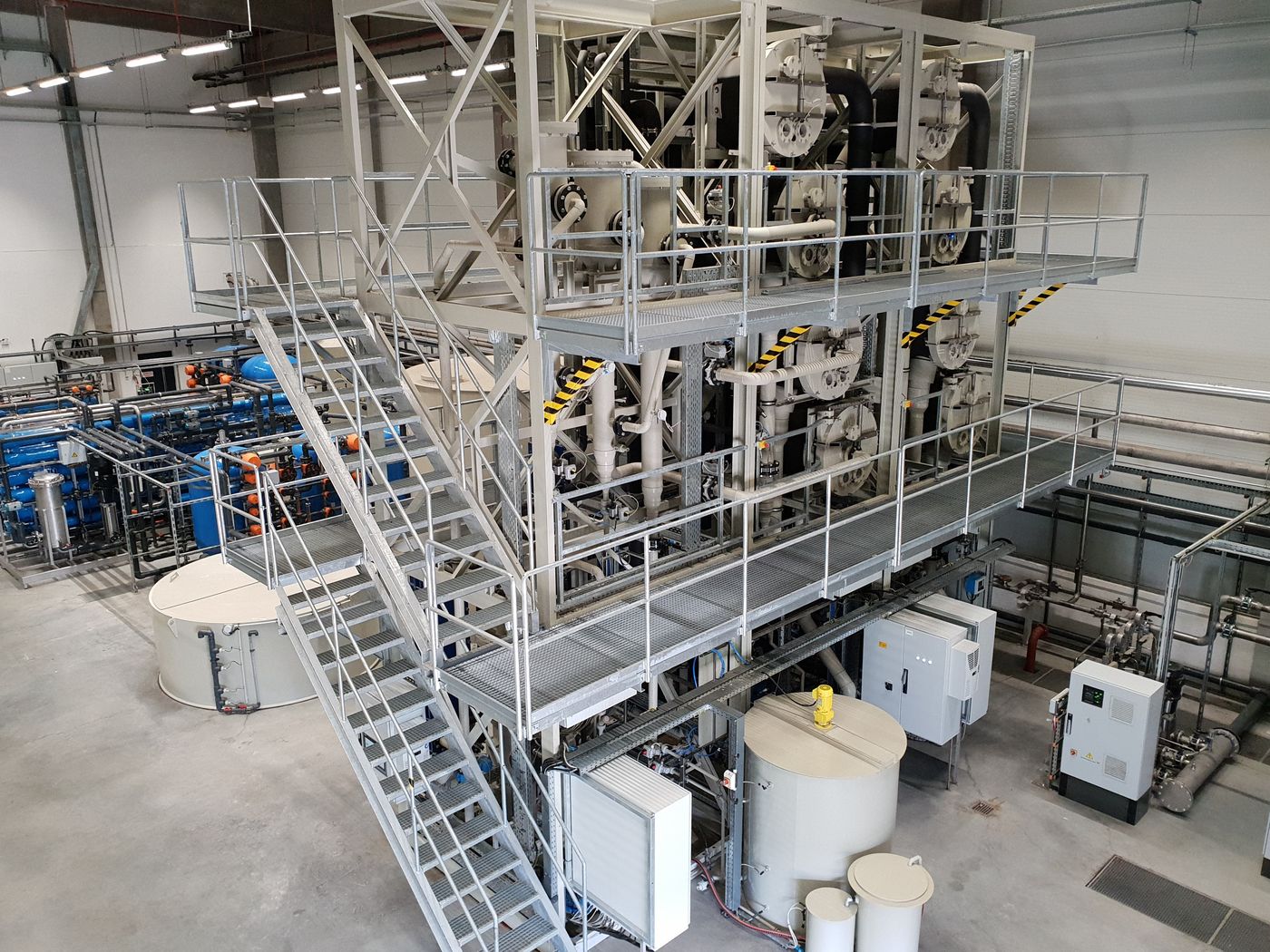
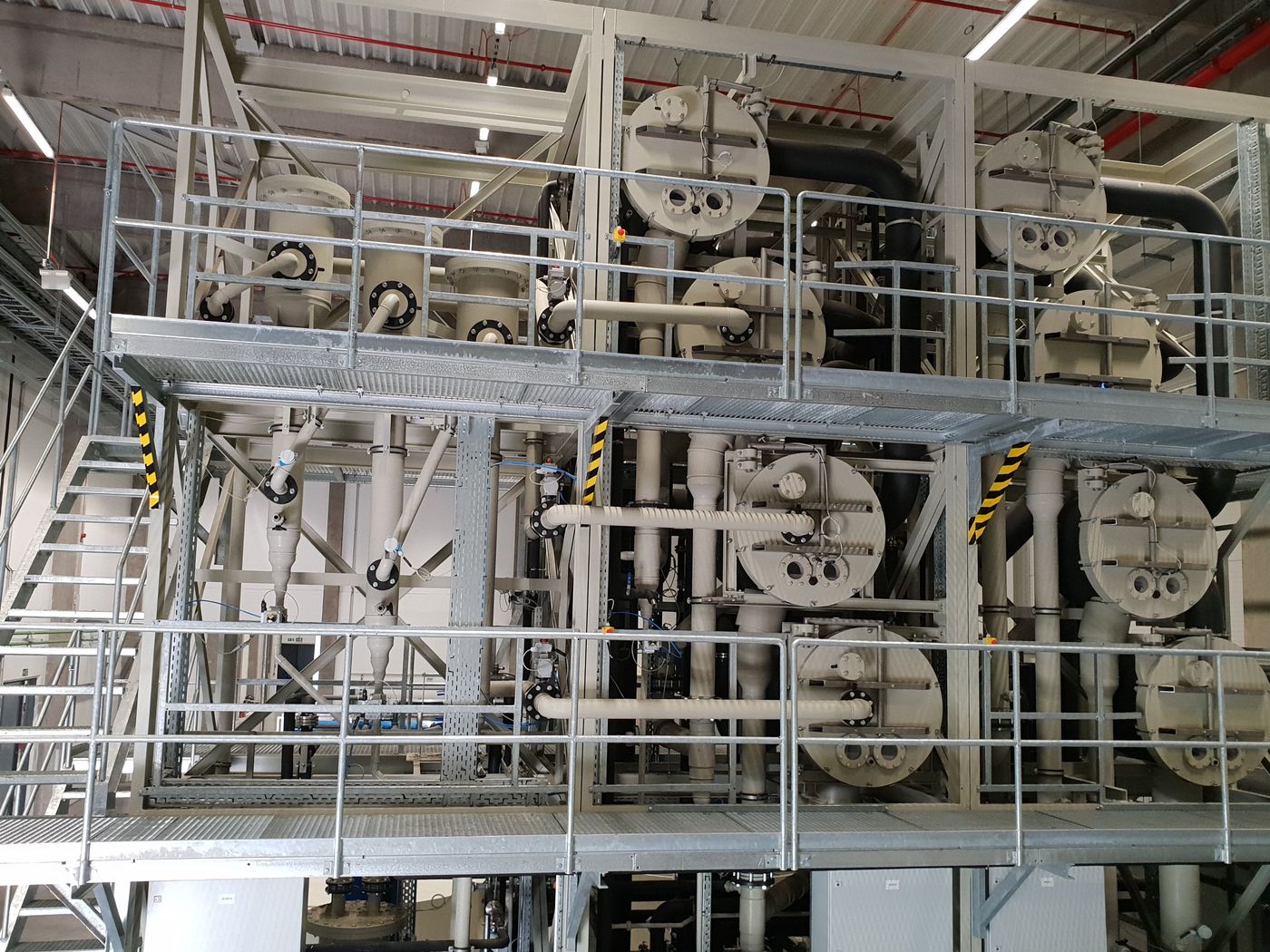
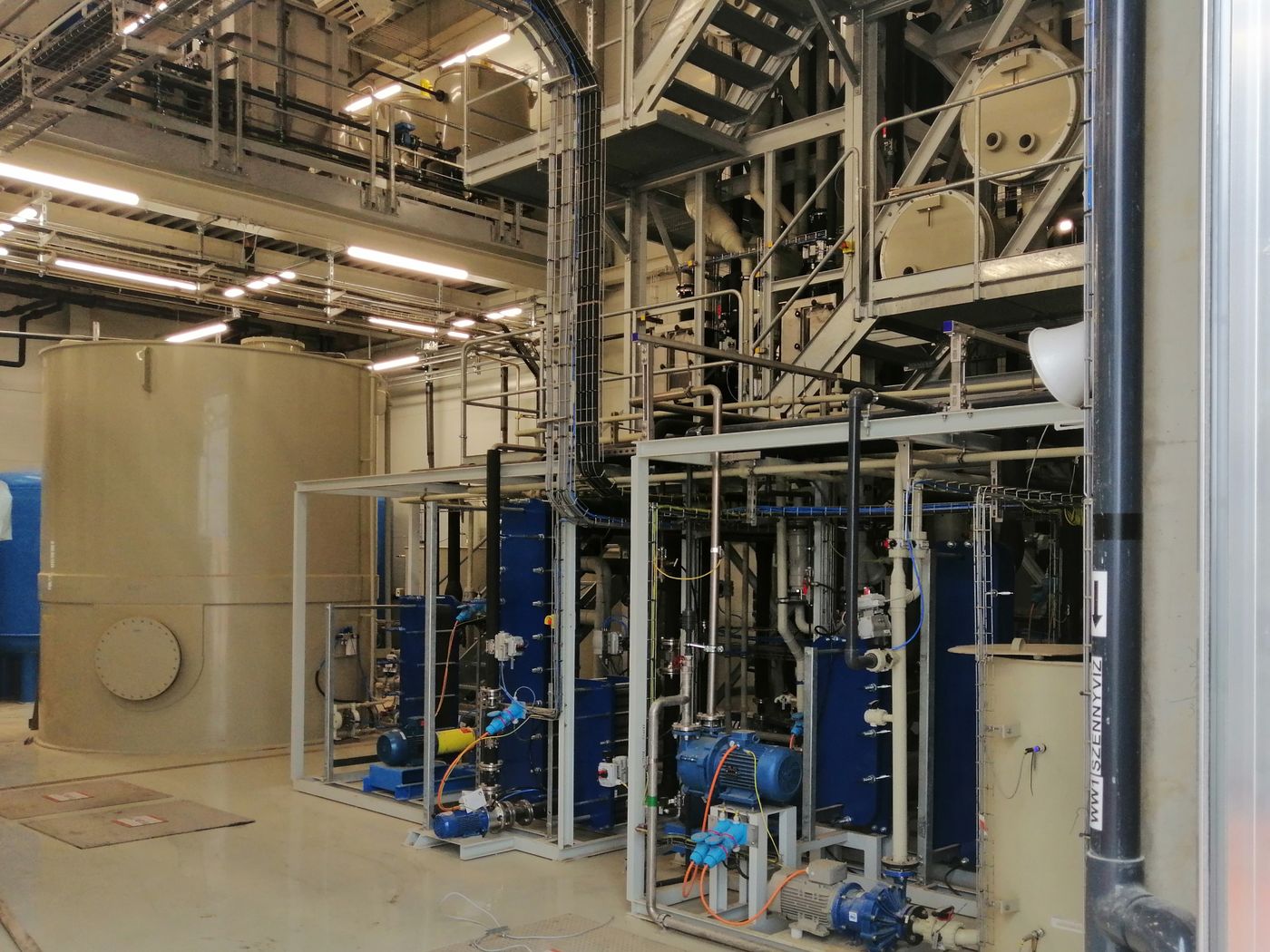
Multi-stage low-temperature distillation: direct-contact evaporators using billions of droplets, able to run all the way into precipitation.
The patented Low Temperature Distillation technology (LTDis), developed by Thermal Purification Technologies GmbH and implemented by UTB Envirotec, is a multi-stage thermal process using direct-contact evaporators and condensers with billions of water droplets for efficient heat transfer. Built with polypropylene and titanium alloys, the system handles high concentrations, including precipitation of dissolved solids, and operates on low-grade heat or full electrical power via mechanical vapor recompression. Applications include seawater desalination, brine concentration, and industrial wastewater treatment. The system is modular and can be extended with a crystallizer for specific needs.
How it works
The process
LTDis is an award-winning multi-stage thermal process invented by UTB's Swiss partner Thermal Purification Technologies (TPTec); UTB carries out the development and the industrial-scale implementation. The novelty is direct-contact evaporators and condensers that use billions of water droplets to transfer heat, so there is no phase change on a solid surface and no tube bundle to foul. Wetted parts are polypropylene, with titanium alloys at the heat exchangers. Because precipitation inside the plant is accepted rather than avoided, it can run at high concentration, up to and into precipitation of the dissolved solids, which is what delivers the high conversion ratio. It can take low-grade heat from various sources, or steam, or be built fully electric using mechanical vapour recompression.
Specifications
| Sizes | XS to XL: 800 to 52,000 m³/year |
| Distillate production | 0.06 to 3.30 m³/h |
| Max rated heat input | 25 to 1,500 kW |
| Specific thermal demand | 200–400 kWh/m³ |
| Specific electrical consumption | 10–40 kWh/m³ |
| Modular unit range | 50–350 m³/day |
| Wetted parts | Polypropylene; titanium alloys at heat exchangers |
| Options | Crystalliser stage; fully electric operation via MVR |
Key advantages
- 50–350 m³/day modular unit
- 250 kW thermal / 10 kW electrical per unit
- No phase change on solid surfaces
- No tube bundles required
- Accepts precipitation inside the plant, so conversion ratios stay high
- Runs on low-grade heat, steam, or fully electric with MVR
- Low operating costs
- Modular: capacity added in steps as production changes
- Can be extended with a crystalliser to meet discharge limits
Gallery
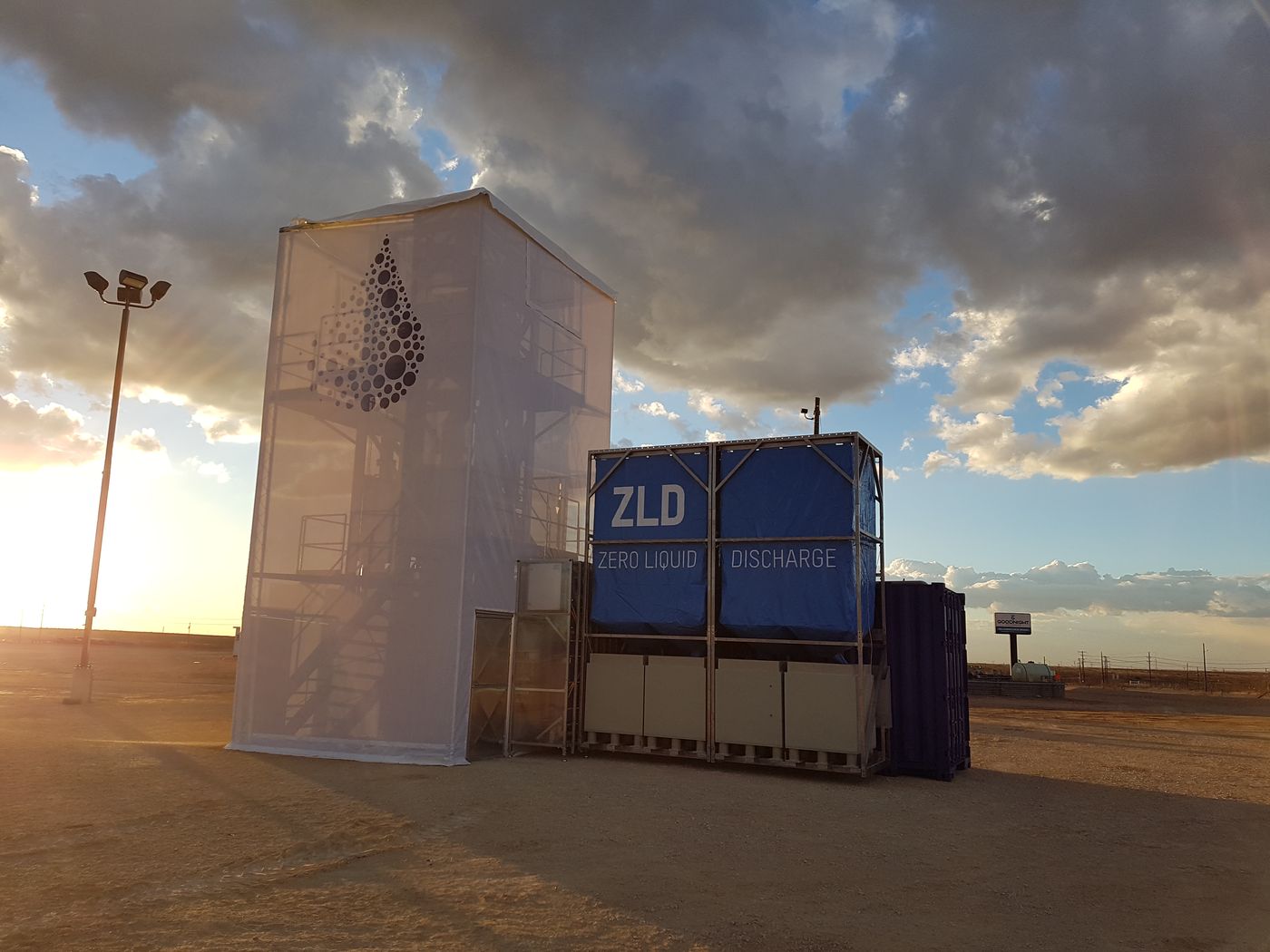
Where it is applied
- Seawater desalination
- Brine concentration
- Anaerobic digester leachate
- Oil and gas exploration water
- Battery industry
- Zero liquid discharge duty
Case studies
Written up with commissioning data, influent and effluent.

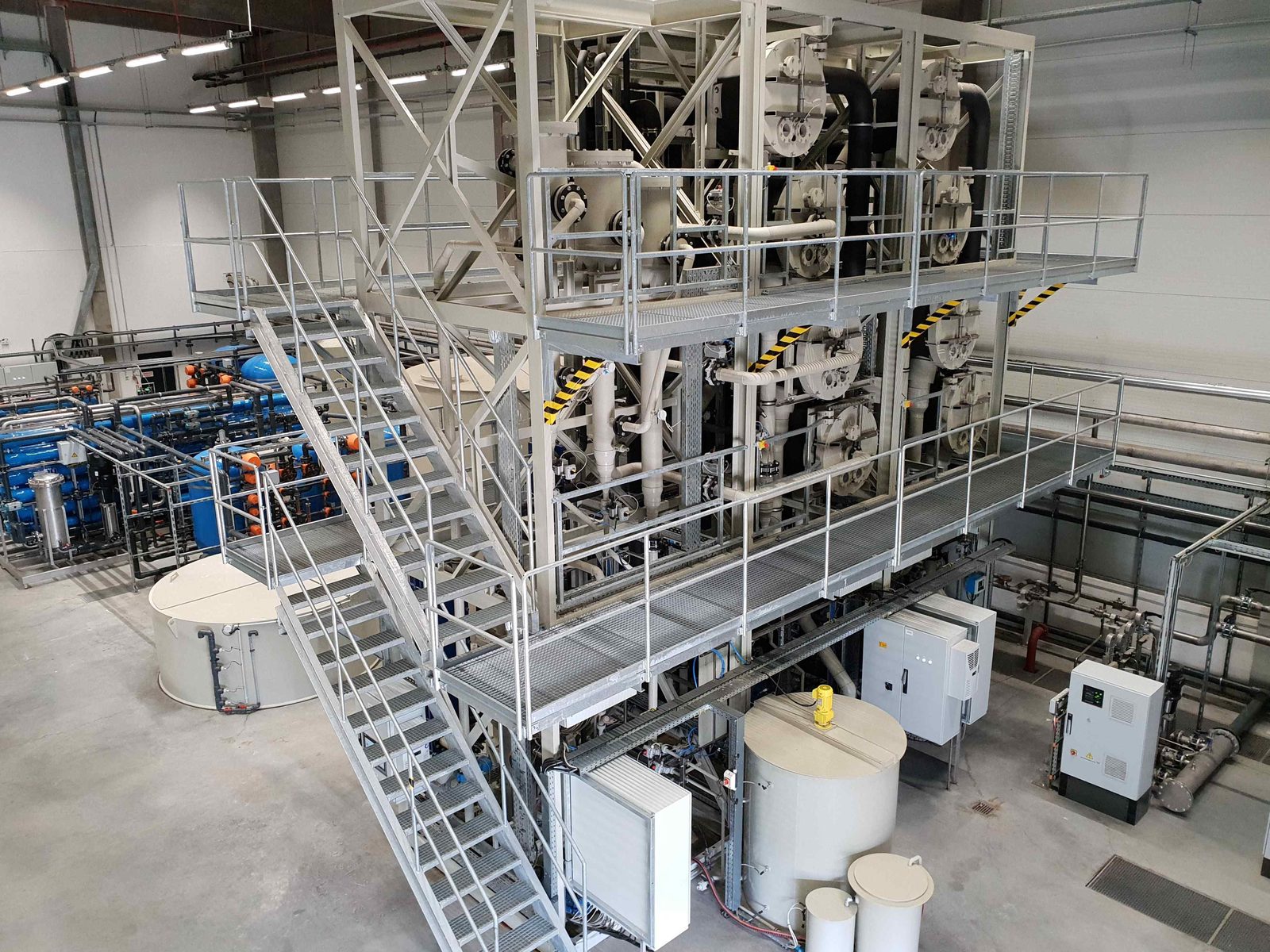

Reference plants
The largest 6 of 6 plants delivered with LTDis, 2016–2020.
| Plant | Location | Capacity | Year | Process |
|---|---|---|---|---|
| DOOSAN, Phase 2 | Tatabánya, Hungary | 1,024 m³/day | 2020 | Physico-chemical · Vacuum distillation · ZLD |
| Apollo Tyres Kft. | Gyöngyöshalász, Hungary | 720 m³/day | 2016 | UF · RO · Vacuum distillation · ZLD |
| DOOSAN, Phase 1 | Tatabánya, Hungary | 501 m³/day | 2019 | Physico-chemical · Vacuum distillation · ZLD |
| Budapest FCSM | Hungary | - | - | ZLD |
| Kecskemét Bacsviz | Hungary | - | - | ZLD |
| Bakersfield | California, USA | - | 2017 | Vacuum distillation · ZLD |
Have a project?
Request a technical assessment