UTB Envirotec 30-year anniversary logo

Contact

Solutions

ZLD and Reuse

Closing the water loop: zero and minimal liquid discharge, brine taken through to dry salt, and water recovered for reuse.

Where water is scarce, expensive or tightly permitted, the cheapest cubic metre is the one already on site. We concentrate what is left, distil clean water back out of it, recover salts and metals, and polish whatever goes on to reuse.

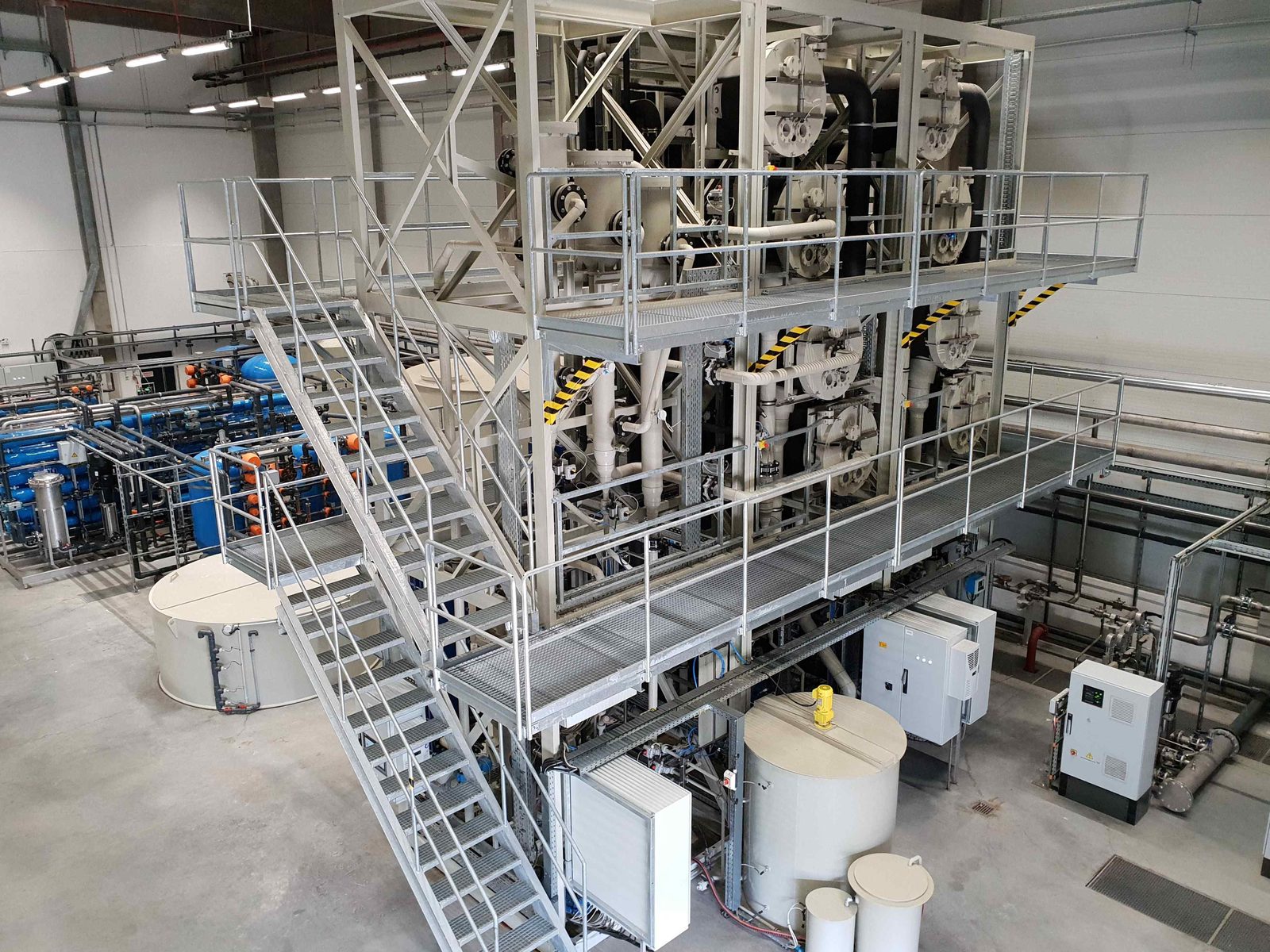
LTDis® multi-stage low-temperature distillation, developed with Swiss partner Thermal Purification Technologies and taken to industrial scale by UTB, handles concentrations right through to crystallisation of dissolved salts, in modular units of 50–350 m³/day running on low-grade waste heat. Mechanical vapour recompression (MVR) lets the plant run on electricity alone where no waste heat is available. SILEX™ continuous sand filtration needs no backwash sequence and no backwash water.

At Volta Energy's copper foil plant the reverse-osmosis concentrate is split into clean water and crystallised salt. At Apollo Tyres the loop is closed with reverse osmosis and LTDis vacuum distillation.
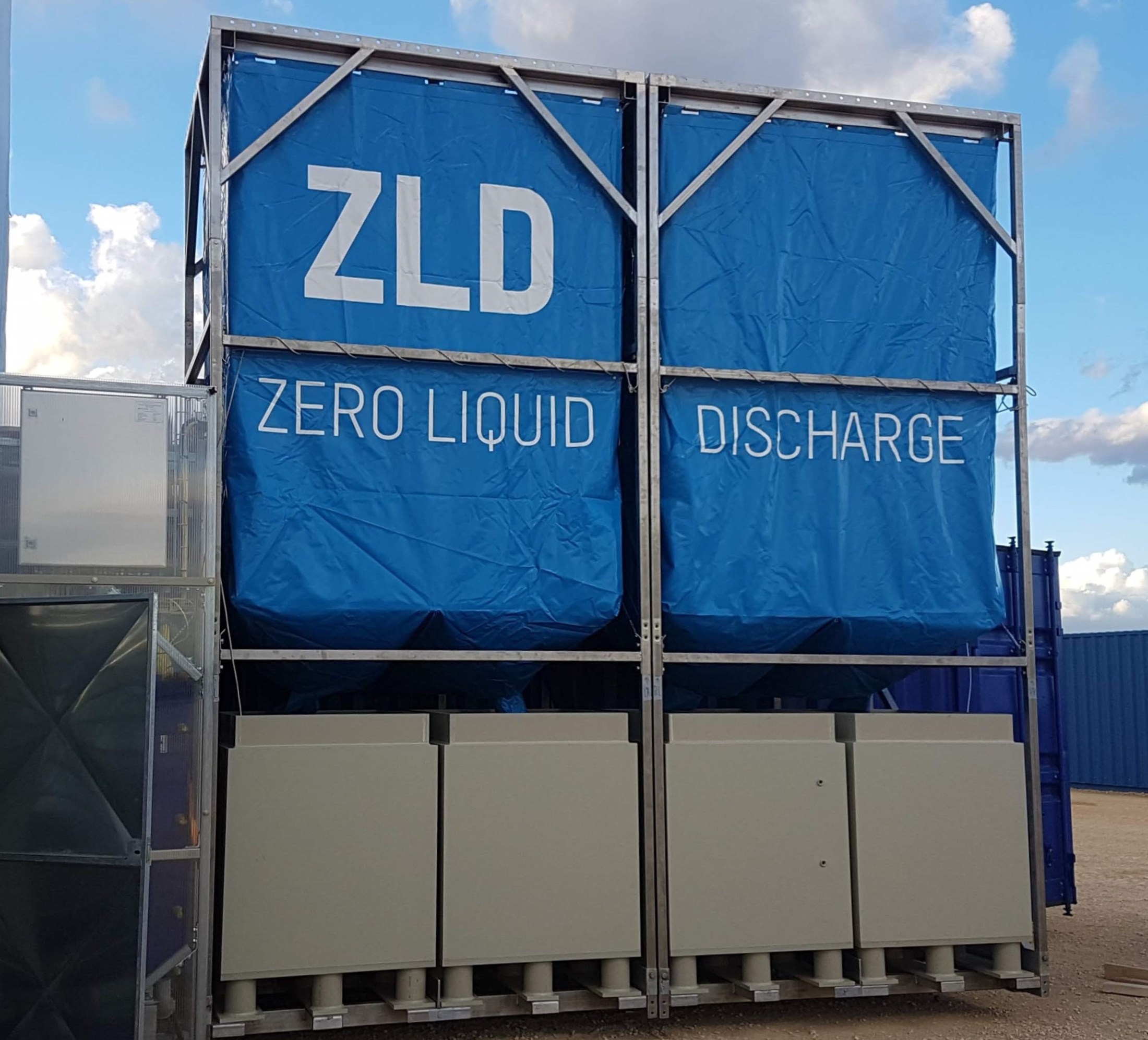
Containerised zero liquid discharge (ZLD) unit for water reuse
LTDis zero liquid discharge demonstration unit, USA

What it covers

Zero liquid discharge

  • RO and salt brine concentration
  • Precipitation and crystallisation of dissolved solids
  • Battery, semiconductor and metals process water

Reuse

  • Process water recovery
  • Polishing ahead of membranes
  • Effluent to tighter limits than the permit requires

Concentration duty

  • Chemical evaporation and purification
  • Anaerobic digester leachate
  • Oil and gas exploration water

UTB advantages

  1. 01
    Industrial scale, not a pilot

    LTDis was developed with Swiss partner Thermal Purification Technologies and taken to industrial scale by UTB: modular units running 50–350 m³/day.

  2. 02
    Energy on your site's terms

    Waste heat where the site already has it, fully electric through MVR where it does not, so no external steam has to be found.

  3. 03
    Technologies engineered as one loop

    LTDis, MVR and SILEX designed to work together rather than bought separately and made to fit.

  4. 04
    Tested before it is committed

    Bench and pilot trials on the real concentrate before the plant is sized, on a duty where getting it wrong is expensive.
Frequently asked questions

Zero liquid discharge (ZLD) recovers all of the water from a wastewater stream and leaves only solid salts, so no liquid effluent leaves the site. A typical ZLD plant combines pre-treatment, reverse osmosis, brine concentration by evaporation and a final crystalliser. At Apollo Tyres in Hungary, our 720 m³/day reverse osmosis and LTDis plant recycles almost all of the site's wastewater.

Choose ZLD when regulations demand true zero discharge or water is scarce enough that every cubic metre counts; otherwise MLD often delivers most of the benefit for far less. MLD typically recovers 85–95% of the water and sends a small concentrated stream to disposal, avoiding the most energy-intensive evaporation and crystallisation step. A feasibility study or pilot trial shows which your stream and permit call for.

It depends on whether you have waste heat: if you do, LTDis usually wins on operating cost; if you do not, MVR does. MVR evaporators run on electricity at 8–14 kWh/m³ of evaporated water by recompressing their own vapour, while LTDis runs at 50–80 °C on low-grade heat and handles concentrations through to crystallisation. Many plants combine the two.

Recovered water is often cleaner than the plant's raw water supply, so it can go straight back into production. Depending on polishing, it is reused as process water, cooling-tower or boiler make-up, or ultrapure water for semiconductor and battery production. Reuse cuts both water purchase and discharge costs, and makes energy and power and other industrial sites less dependent on an increasingly scarce supply.

Yes: crystallisation separates salts that can be reused or sold, and the same concentration steps recover valuable metals. That ranges from copper and chrome in surface treatment to lithium and other metals in battery and battery-materials production. At Volta Energy in Tatabánya, separate copper and chrome lines feed LTDis evaporation and crystallisation at 1,024 m³/day.

Yes: we design ZLD and MLD systems for both markets, sized to the local permit and to the value of the water recovered. In India, regulators require zero liquid discharge for a growing range of industries, including textiles, tanneries, distilleries and pharmaceuticals in many states. Across the Gulf, water scarcity makes reuse the cheapest new source of supply, as our chemicals and pharmaceuticals clients know well.

Send your flow rate, load and discharge limits.

An engineer will come back with an indicative process solution and a view on whether a pilot trial is worthwhile.

Request a technical assessment